
Paul Newman: Racing, Cards, and the Disciplined Player
Paul Newman loved racing and gambling. What distinguished him from other celebrities was not the love but the discipline. He understood the mathematics.
Rizz Cash Tape3 min read
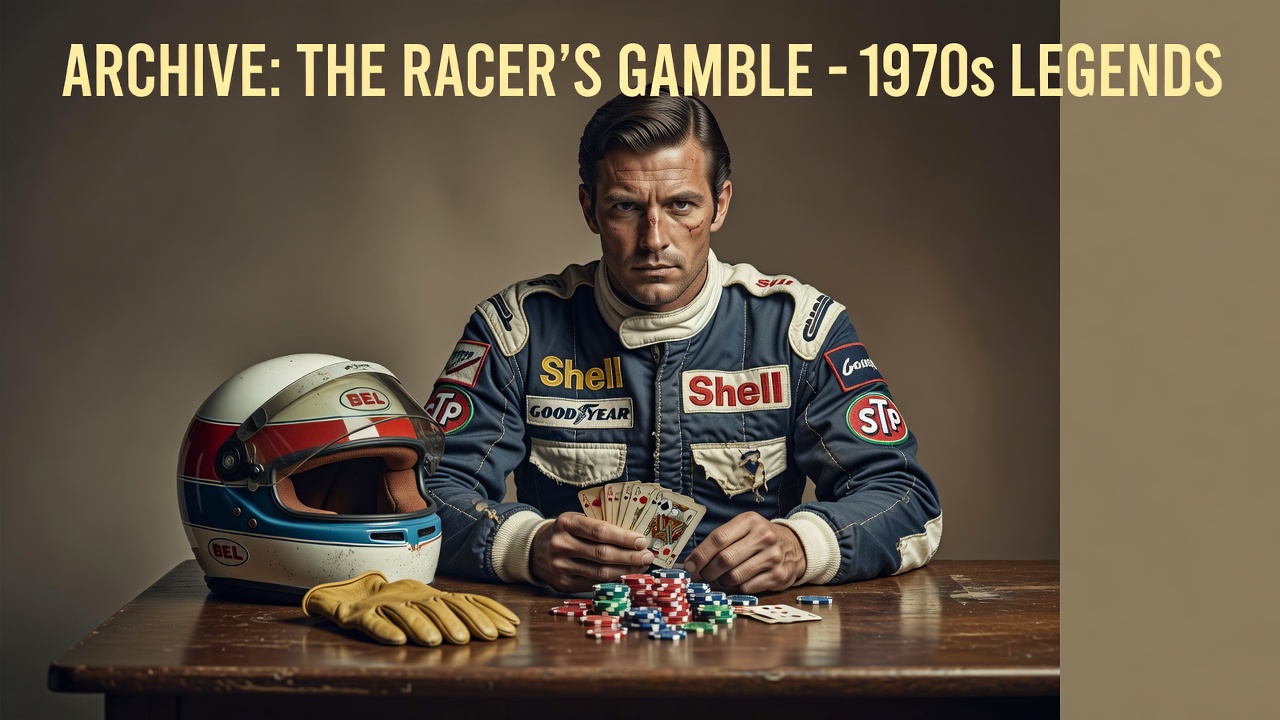
Paul Newman was a race car driver and a gambler. Most people know the racing part. The gambling part is less documented, possibly because it contradicted his public image as an intellectual and an artist. Yet the two pursuits reveal something about how a disciplined mind approaches games of chance.
Newman began racing in 1954. He was thirty years old. He had established himself as an actor. He brought the same approach to racing that he brought to acting: precision, repetition, mastery through obsessive attention to detail.
He raced for nearly forty years. He was not the fastest driver on the circuit, but he was consistent. He won races. He competed against professionals. He did not treat racing as a hobbyist.
The Card Room
Newman's gambling was primarily centred on poker and other card games. He played in Los Angeles and Las Vegas. He played with actors, with businessmen, with professional gamblers. Unlike celebrity players who lose money and shrug, Newman tracked his wins and losses. He studied the mathematics of poker.
This is the important detail: Newman treated cards like he treated racing. He learned the mechanics. He understood the probabilities. He played within a system.
The first part of poker mastery is understanding that most people play by instinct. They play hunches. They think they can read people. They believe in luck. Newman did not believe in luck. He believed in information asymmetry and position advantage.
The Systems Approach
Newman's approach to cards was to build a system and follow it. In racing, the system was aerodynamic efficiency, fuel management, tire wear. In poker, the system was hand selection, position, pot odds, bankroll management.
He had a known betting pattern. He played tight. He folded most hands. He played strong hands from good positions. He did not bluff frequently. His style was not entertaining, but it was profitable.
This matters because entertainment and profit are opposite forces in gambling. A player who wants to be entertained plays loose, plays bluffs, takes chances. A player who wants to profit plays tight, plays mechanically, removes emotion.
Newman chose profit.
The Integration
Where the picture becomes interesting is how racing and cards informed each other. Racing taught Newman that small margins compounded. A tenth of a second per lap, over 500 laps, is a difference of nearly a minute. That is the difference between winning and losing.
In poker, the same principle applied. A player who wins small edges in most hands will, over time, accumulate large winnings. Newman understood this. He played for small advantages. He accumulated them.
The reverse was also true. Racing taught Newman about pressure and focus. The ability to maintain concentration during a three-hour race is similar to the ability to maintain concentration during a ten-hour poker session. The stakes differ, but the mental discipline is analogous.
The Emotional Component
Newman was known to be calm under pressure. In interviews about racing, he would describe the mental state he entered: complete focus, no emotion, pure technical execution. He brought this to poker as well.
When he lost a hand, he did not get angry. When he won, he did not celebrate. He treated each hand as data. This emotional discipline is rare. Most poker players have leaks that emotion creates. Newman did not.
The Limit
One detail that is often overlooked: Newman had a disciplined approach to bankroll management. He did not risk money he could not afford to lose. He played within a system that protected him. He did not go broke. He did not make desperate plays.
This is the distinction between recreational gambling and professional gambling. A recreational player hopes. A professional manages. Newman was professional in his approach, even though he never identified as a professional gambler.
The Legacy
Newman died in 2008. His poker record was not extensively documented. He won and lost over the decades. What remains is the reputation: a man who played cards with discipline, who understood the mathematics, who treated gambling as a system to be mastered rather than a lottery to be enjoyed.
This is an unusual approach. Most wealthy people who gamble treat it as entertainment. Newman treated it as a craft. Racing and poker were both pursuits where small advantages, compounded over time, created results. He was not trying to get rich. He was trying to be good at the game. The money was secondary.
This distinction, between entertainment and mastery, separates the players who win from the players who lose. Newman chose mastery.