
Wayne Newton's Vegas Legacy and Casino Residencies
The man who played Las Vegas 40 years without leaving changed what it meant to be a celebrity in a casino town.
Rizz Cash Tape3 min read
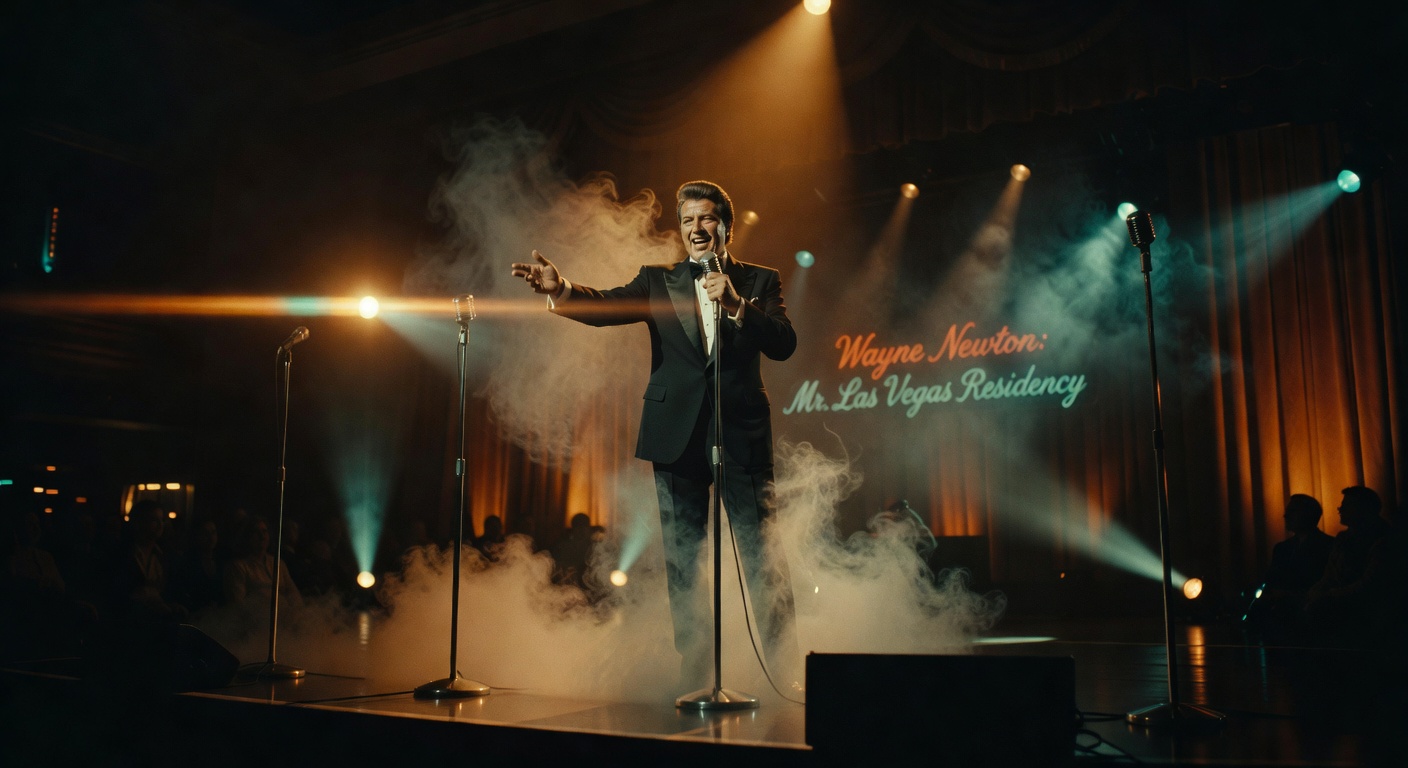
Wayne Newton walked into the Copa Room at the Sands in 1963 with a red carnation and an instinct for what a casino audience wanted. He was 21. He would not really leave for four decades.
The residency was not yet a concept in American entertainment. Performers passed through. Newton stayed. He played 10,000 shows. The number has been verified. Some nights he played twice. The audience knew what they would get: a man in a suit with a voice that bent toward the sentimental, a guitar he had learned to play by copying his father, and a certainty about what made a room full of strangers feel less alone.
Casinos understood something about Newton that most entertainers did not. He made the place feel intimate while filling it with noise. The high-roller sat three rows from the cheap seat and felt seen. The woman in from Reno for her birthday felt like the show was built for her specifically.
The Sands Era
The Sands was where Newton learned his trade. The Copa Room held 600 people and smelled like cigarette smoke and possibility. The casino had hired Frank Sinatra, Sammy Davis Jr., Dean Martin. Newton was not in that league. He was younger, hungrier, and willing to play six nights a week for wages that would have been insulting anywhere else.
But the math of the casino works differently. A performer who stays draws people who come back. A tourist might catch Sinatra once. Newton made tourists into repeats. The pit bosses noticed. The hosts noticed. By 1965, Newton was making more money than the headline acts because he filled seats every single night.
He learned the casino floor that way. Learned the names of dealers and pit bosses. Learned which songs pulled people toward the bar and which ones made them lean back and think about home. Learned that a standing ovation means less than a person who comes back for one more week.
The Longer Game
Newton moved to the Flamingo in the early 1970s. Then the Stardust. Then back again. He was not chasing prestige or record deals. He was playing the longest game in American entertainment. Every year his contract would renew. Every year he would show up and play.
The voice aged. The suit stayed impeccable. The guitar work became tighter. Newton was not competing with younger singers. He was competing with the memory of what you felt the last time you saw him. That is a different kind of competition and one he understood completely.
Celebrities came and went from Vegas. Newton stayed. Musicians who came to mock him left with a strange respect. He was not trying to prove anything. He was working.
The Invention of the Residency
Newton did not invent the residency, but he proved you could make it a career. Celine Dion came later. Britney Spears, Jennifer Lopez, Chris Brown. None of them played 10,000 shows in one town. None of them knew the dealers by their first names or the preference of every regular at the bar.
Newton made the casino into a stage and the stage into a casino. The line between performer and proprietor blurred. He was there to make money, certainly. But he was also there to be present. To show up. To do the work.
That distinction, small as it sounds, changed what Las Vegas became. It shifted from a place where famous people performed to a place where performers built their lives. Newton proved that was possible. He also proved that once you proved it possible, you might never want to leave.
By the time Newton slowed down in his 50s, residency was the aspiration. You had made it in Vegas not when you played a single night. You made it when you could commit to 100 shows a year, year after year, and still fill the room. Newton taught that lesson every night for four decades, sitting on a stool with a guitar and a voice that wanted to take you home.