
Crypto Gambling Regulation: Why It's So Fragmented Globally
Rizz Cash Tape3 min read
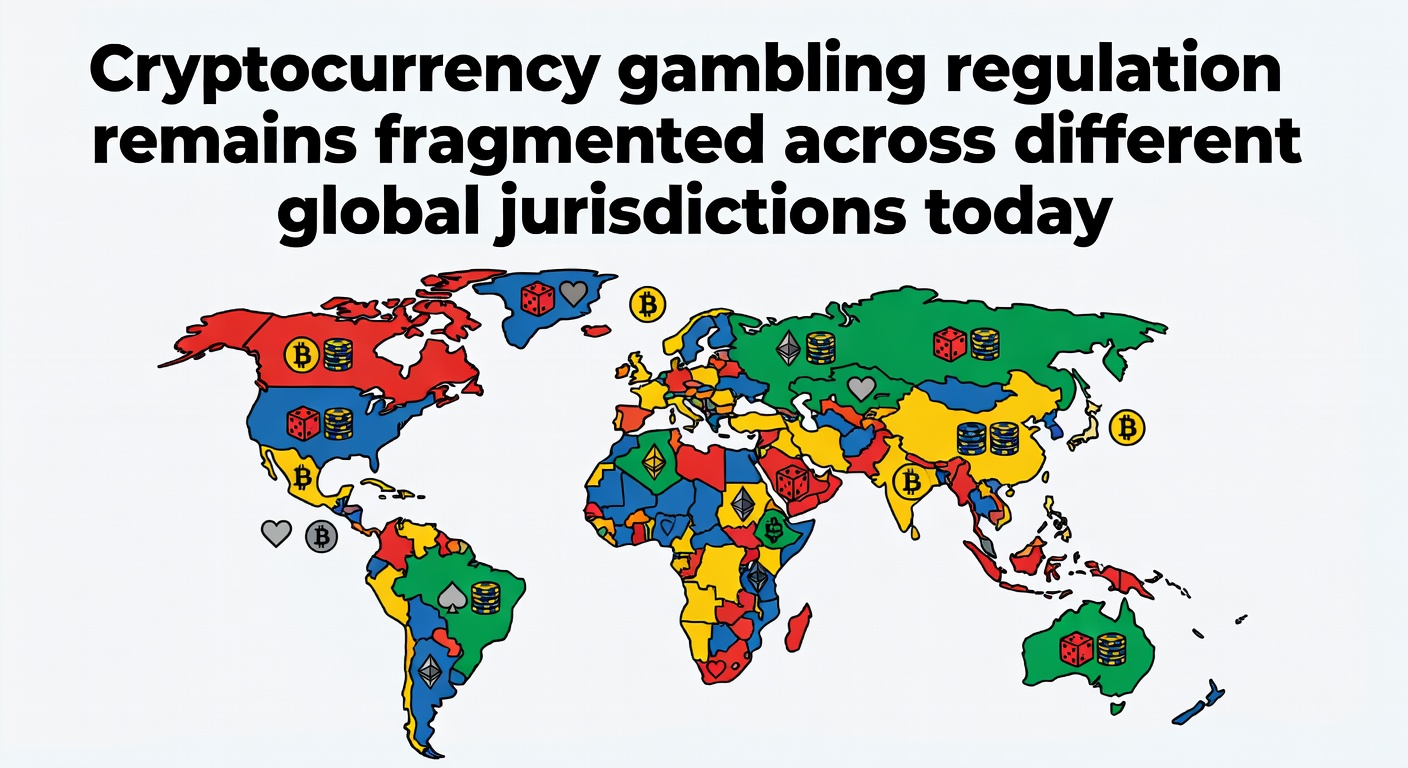
The underground poker room I documented in Singapore operated on the top floor of a shopping mall during weekday mornings. From 6am to 3pm, it served the regional traders and night-shift workers who needed a game. No signage. No mention online. Word-of-mouth only. The operators maintained this invisibility precisely because Singapore's government prohibited unlicensed gambling entirely. One permit denial, one zero-tolerance policy, created the entire ecosystem around it. Crypto gambling regulation operates in exactly this spirit of fragmentation: each jurisdiction makes its own choice, and the sum total is chaos.
The reason crypto gambling regulation is fractured stems from a fundamental disagreement about what crypto is. The EU treats it as financial infrastructure subject to banking rules. The US treats it as a commodity in some contexts and currency in others. Malta treats it as a gambling product. These aren't minor variations. They're incompatible regulatory frameworks applied to the same technology.
When a crypto casino operates from Malta under the Malta Gaming Authority, it must segregate player funds, maintain strict RNG verification, and comply with GDPR for EU residents. When the same casino serves American players through a VPN, it's operating in legal gray zone in the US. Federal law prohibits unlicensed gambling on the internet. States like Nevada have specific frameworks for licensing. But crypto casinos themselves sit in an undefined space. They're not running from state jurisdiction. They're on the blockchain, which has no physical location.
The MGA vs UKGC Standard
Malta and the UK developed sophisticated regulatory approaches specifically because they wanted crypto gambling operators to base there. The Maltese government saw a revenue opportunity. The UK wanted international players in the ecosystem, generating tax revenue. Both created licensing paths. Both required proof of responsible gaming measures, fund segregation, and game verification. The standards are high. They're also expensive to meet.
Operators licensed in these jurisdictions include:
- Stake: Licensed in Curacao and operating worldwide except restricted territories.
- Rollbit: Licensed in Costa Rica but using Curacao as backup.
- Primedice: Curacao-based and unregulated in most jurisdictions.
- Pragmatic Play: Offering crypto products through licensed subsidiaries.
But here's the problem. A casino licensed in Curacao operates under almost no regulatory oversight. Curacao's eGaming licenses are effectively self-regulated. The operator applies, pays a fee, and receives a license. No meaningful audit happens. No fund segregation requirement. No RNG verification. This creates a two-tier system.
Countries like Australia, Canada, and the UK respond by blocking access. They mandate that crypto casinos serving their residents meet the same standards as traditional casinos. Some players use VPNs. Some operators serve them anyway. The result is regulatory cat-and-mouse where every player connection is technically a violation and every operator service is technically unlicensed in the jurisdiction receiving the service.
There's no international gambling regulatory body. There's no FATF equivalent for gaming specifically. Interpol coordinates on trafficking and financial crime but not gambling law. The United Nations has never created a unified gambling framework. This vacuum is filled by unilateral national decisions.
Asia presents a particular case. Japan allows pachinko and horse racing but prohibits casinos. South Korea allows limited casino gambling at licensed venues but not online. Singapore bans gambling entirely outside the single state-licensed operator. China treats all gambling as criminal. India allows some gambling under state control but not the crypto kind. The same technology is criminal in one country, regulated in another, and quasi-legal in a third. A player in Bangkok connecting to a crypto casino is breaking Thai law. A player in Malta doing the same thing is participating in a regulated activity.
The fragmentation also reflects genuine policy disagreements about whether crypto gambling should exist at all. Iceland, where crypto mining is common, has still not created a regulatory path for crypto casinos. The government distinguishes between mining activity (which consumes electricity) and gambling activity (which they view as pure extraction with no productive component). The decision to prohibit reveals a value judgment that crypto gambling is harmful in ways that traditional gambling might not be.
Technicality creates openings. A player in the UK can access a Curacao casino if the player circumvents blocking. The casino cannot legally serve them, but the player can access it. This creates a market where neither regulation nor prohibition works perfectly. Players have access. Casinos have plausible deniability. Governments express disapproval and cannot enforce it.
The likely evolution involves either greater harmonization, where major jurisdictions coordinate standards, or greater fragmentation, where each jurisdiction builds walls higher. The EU's Digital Services Act may push toward harmonization. US state-level variation may push toward continued fragmentation. Until those forces resolve, crypto gambling regulation will remain a patchwork of competing frameworks with no global consensus.