
Voisins du Zero, Tiers, and Orphelins: Called Bets Explained
Called bets cover specific sections of the roulette wheel by name. Voisins covers 17 numbers. Tiers covers 12. Orphelins covers the rest. What is the point, and who uses them?
Rizz Cash Tape3 min read
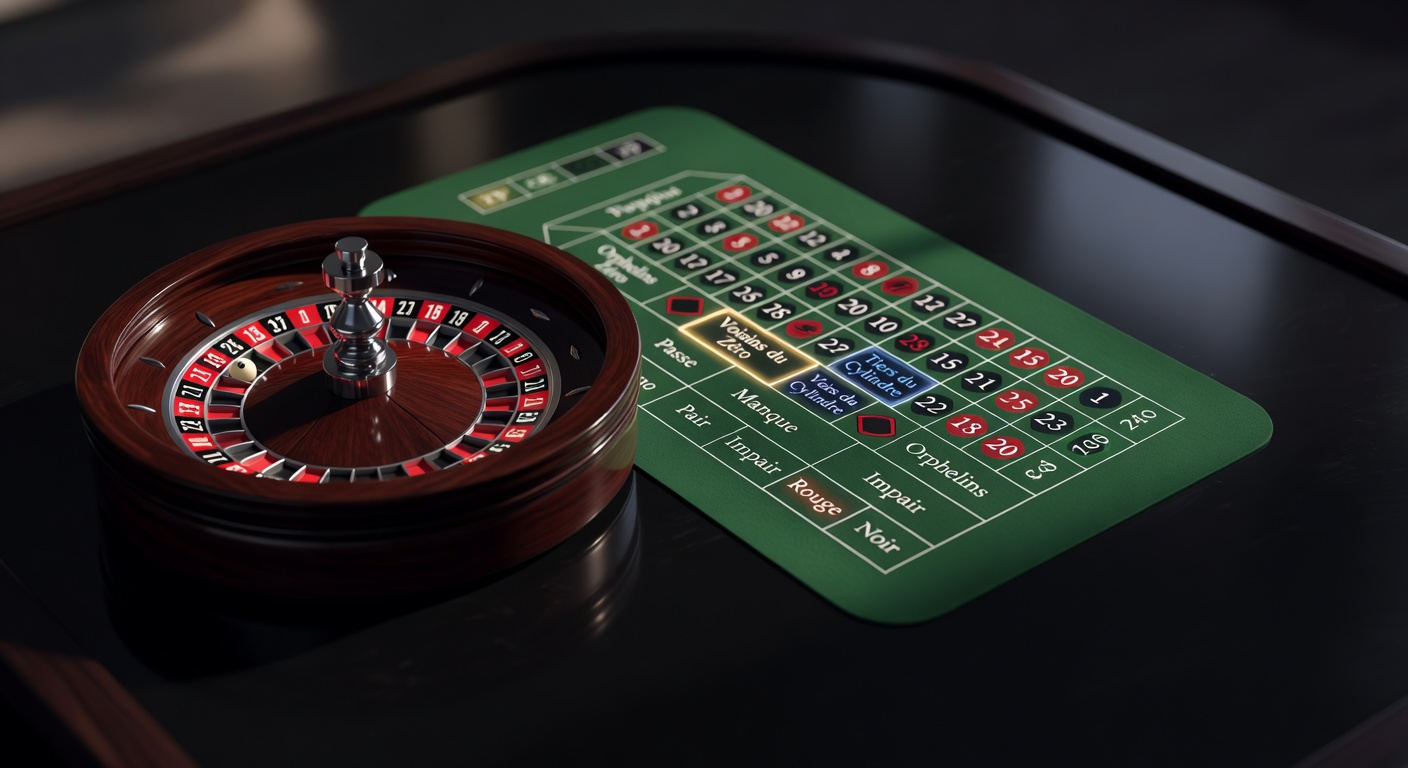
In 1989, I watched a man at a table in Prague place 300 euros on Voisins du Zero. He did not speak. He just handed the dealer chips and pointed. The dealer nodded and placed bets across seven different areas of the layout. The next hand the man lost 300 euros. I asked him later why he played that way. He said: because my father taught me.
Voisins du Zero means neighbors of zero. It is not a bet on zero. It is a bet that covers a section of the roulette wheel.
How the Wheel Is Divided
A roulette wheel has 37 numbers (including zero in European roulette). The layout is not random. Numbers are arranged so that no two adjacent numbers are close in value.
Called bets are wagers placed on contiguous sections of the wheel, not the betting layout. The dealer translates the section name into specific bets across the numbered areas.
Voisins du Zero
Voisins covers the 17 numbers closest to zero on the physical wheel: 22, 18, 29, 7, 28, 12, 35, 3, 26, 0, 32, 15, 19, 4, 21, 2, 25.
To play Voisins, you place chips and tell the dealer the section. The dealer places bets: four chips on corner 0-1-2-3, six chips on corner 25-26-28-29, three chips on the street 12-14-15, and four chips on the line 6-9. The specific placements depend on the casino's house rules.
A 9-chip Voisins bet costs 9 units. If one of those 17 numbers hits, you win some of your chips while losing the others.
Tiers
Tiers du Cylindre covers 12 numbers on the opposite side of the wheel from Voisins: 33, 16, 24, 5, 10, 23, 8, 30, 11, 36, 13, 27.
Tiers is placed as a six-chip bet: six chips on six different splits (two-number combinations). If one of the 12 numbers hits, you win a smaller payout because your stakes are spread thinner.
Orphelins
Orphelines are the remaining numbers not covered by Voisins or Tiers. There are 8 of them: 1, 6, 9, 14, 17, 20, 31, 34.
Orphelines are traditionally played as 5 chips on 1 (a straight bet) and 2 chips each on four splits.
Why Anyone Uses Them
Called bets originated in European casinos where players wanted to cover sections of the wheel rather than betting on individual numbers. The advantage, theoretically, is that if the wheel has a slight bias (a worn spot, uneven balance), called bets let you play a geometric section rather than random numbers.
In reality, modern wheels are maintained well. Bias is rare. The true reason players use called bets is habit and the structure of French casinos, where certain types of play are traditional.
The mathematical advantage is zero. You are spreading your bets across multiple outcomes. The expected loss is the same as playing individual numbers. Casinos allow it because some players prefer it and it makes no difference to the house edge.
When They Matter
Called bets become interesting if you play with a small bankroll and want to distribute your chips across many outcomes. A 9-chip Voisins bet covers 17 numbers. A straight bet on 17 individual numbers would require 17 chips. Called bets let you cover sections with fewer chips, though the payouts are smaller.
They also matter in casinos where wheels genuinely have drift (rare, but documented in some private games and older establishments). If the zero or the area near zero hits more often, Voisins is a way to exploit that bias.
The Honest Assessment
Called bets are tradition masquerading as strategy. They are useful only if the wheel has bias. They are easier to remember than individual number strategy. They require less decision-making.
Beyond that, they are roulette. You lose money in the long run. Called bets make the losing happen slightly differently than single numbers, but no less certainly.