
Why European Roulette Has Better Odds Than American Roulette
European roulette wheel has 37 pockets. American roulette wheel has 38. That one pocket changes everything about the game's mathematics.
Rizz Cash Tape3 min read
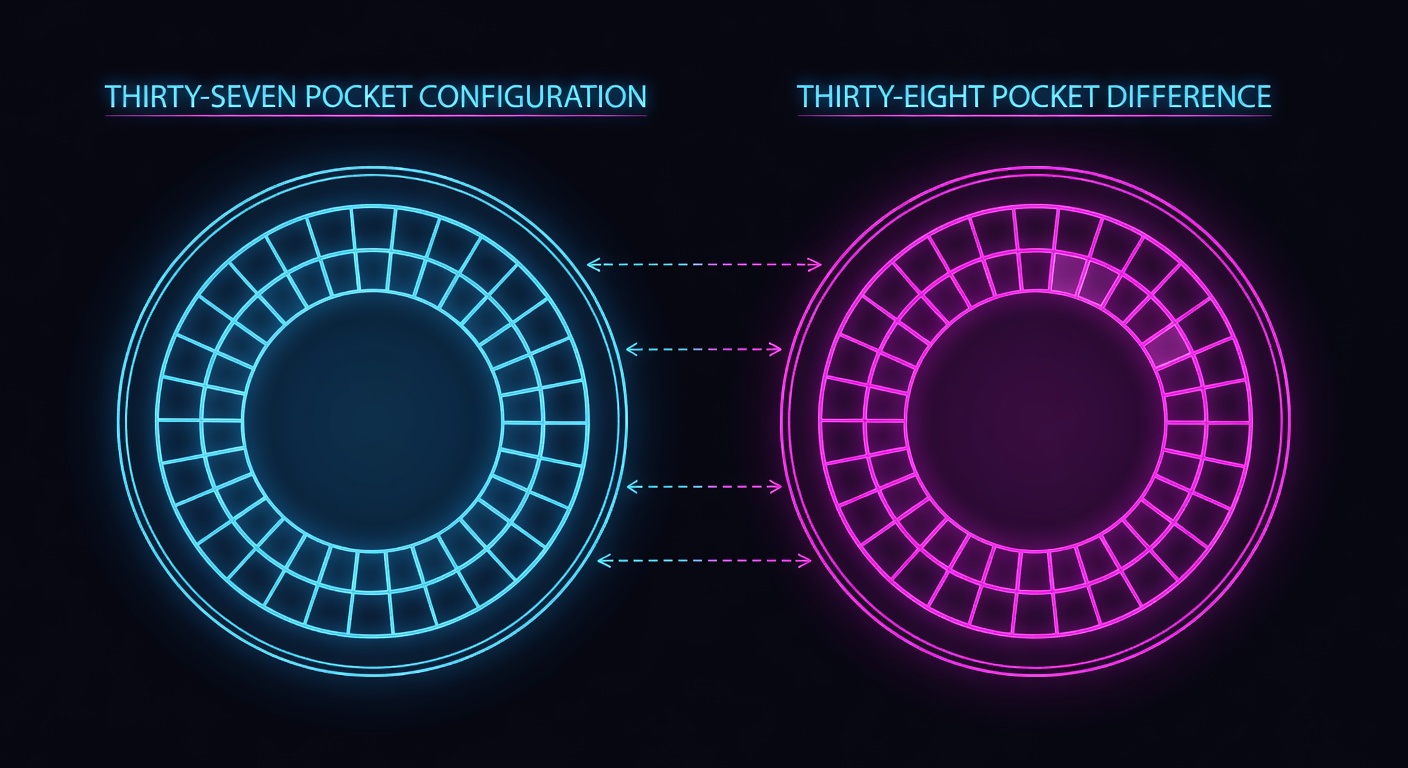
The Pocket Count
Claim: American roulette is just roulette with an extra pocket. It's not that different.
Reality: One pocket shifts the house edge from 2.7 percent to 5.4 percent. That doubles the house advantage. Over a hundred hours of play, that difference is material.
I've spent forty years watching wheels from the Bally's in Atlantic City to the new models coming out of Aristocrat. I can tell you the difference between these two wheels is architectural. Not cosmetic.
The European wheel has 37 pockets, numbered 0 through 36. Every number appears once. When you bet red, you're covering 18 pockets. Black covers 18 pockets. The zero is neutral. It belongs to the house.
When you place a straight bet on any number, you're betting against 36 other pockets plus the zero. The payout is 35 to 1. This payout is mathematically sound for a wheel with only the zero. Over time, the zero generates the house edge. You can calculate it precisely: the house edge is the inverse of the ratio between the true odds and the offered payout.
The American wheel has 38 pockets: 0 through 36, plus the 00 (double zero). Suddenly you have two neutral pockets instead of one. Every bet that would break even on a European wheel now loses money on an American wheel, because there are two ways for the house to win instead of one.
The payout structure is identical. 35 to 1 on a straight. This payout is now too generous from the player's perspective. The true odds against hitting a specific number are 37 to 1. The payout is 35 to 1. The player is not getting paid for the real odds. The difference is compounded by the fact that there are two zeros instead of one.
Why This Matters Over Time
Shortest way to see it: European roulette takes roughly 2.7 cents per dollar wagered. American roulette takes roughly 5.4 cents per dollar wagered. If you spend an evening at a roulette table betting 100 dollars per hand for 30 hands, you've wagered 3,000 dollars. At a European table, you expect to lose about 81 dollars. At an American table, you expect to lose about 162 dollars.
The variance can mask this for a night. You can win big. You can lose more than expected. But over weeks and months, the mathematics reassert themselves. The extra zero gnaws away at your bankroll.
The Practical Observation
Most American casinos have phased out pure European roulette. Too much player advantage, they figured. What they've done instead is add "en prison" rules or "la partage" rules to American wheels. These rules state that if zero or double zero hits, even-money bets (red, black, odd, even, etc.) are either imprisoned (locked for the next spin) or split 50/50 with the house.
This brings the house edge on even-money bets back down to around 1.35 percent, which is halfway to European roulette's advantage structure. So the American casinos figured out they could keep the extra zero and reduce the payout through rule variations.
Why the Difference Persists
Historical accident, mostly. American roulette developed from French roulette, but with a modification. A manufacturer added the double zero to increase the house edge. The practice stuck. European wheels never adopted this because they were already established before the American modification became standard.
Today, you see European wheels in Europe. You see American wheels in American casinos. Online casinos offer both, and the smarter players always choose European wheels because the mathematics are simply better for the player.
The Number That Matters
That one extra pocket, the 00, is the reason roulette is such a reliable revenue generator for casinos. The house edge on an American wheel is brutal. Twice as brutal as on the European equivalent. Players think they are playing the same game. They are not. The game's payout structure has been adjusted to account for an extra pocket that European players never see.
If you have to play roulette, European is the mathematically correct choice. But understand that you are still playing against the house edge. The European advantage is smaller, not absent.