
How Slot Tournaments Work and How to Enter
Rizz Cash Tape4 min read
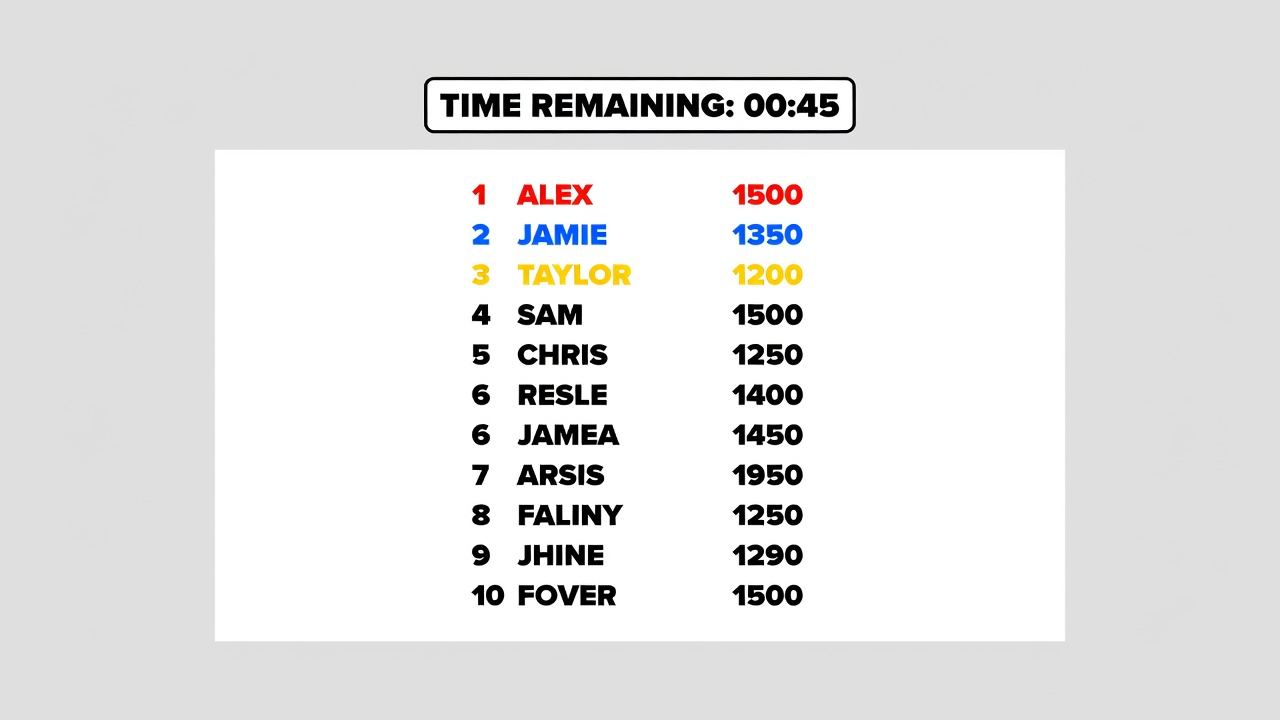
How Slot Tournaments Work and How to Enter, you want to know about this, the real mechanics of how these actually work, because most people show up with half-truths lodged like shrapnel, thinking there is mystery to entry, and I am here to tell you straight: the mystery is marketing, entry is just money changing hands in the direction the casino prefers.
Here is what casinos do not advertise: slot tournaments are mathematically certain to generate the house more money. Not probably more, mathematically more. The tournament structure itself is a tax on volume.
How the Tournament Structure Works
Most tournaments operate on a simple principle: everybody plays the same machine for the same time, usually 10-30 minutes. Your score is measured in credits. Highest score at the end wins cash. Transparent. Clean. Harsh.
What this means in practice is brutal: you get 2500 credits on a machine configured for 85% return (lower than standard because house margin is tighter). You have fifteen minutes. Play at any speed. Goal is maximum credits at end.
The house advantage is immediate and structural. Machine programmed to lose 15% of credits wagered. You play fast because you want to maximize spins in fifteen minutes. This fast play against tight hold is exactly the pattern that guarantees you gift maximum money. Fast play, tight hold, lower return: this is a trap dressed as entertainment.
The entry fee is secondary. You pay 50 or 100 dollars. Casino is not making money on that fee. They are making money on mathematical certainty that tournament conditions amplify house edge. More spins, tighter hold, lower return: this is the structure.
What Actually Happens
Tournament machines track spins automatically. The house knows your play pattern. Aggressive wagering produces faster credit depletion. Conservative wagering means you run out of time before running out of credits.
Scoring system is what kills you. You are not competing against odds; you are competing against how fast you generate spins. Spin velocity becomes the meta-game. A player making $1 bets accumulates more total spins than a player making $10 bets. Higher spin velocity beats higher average win size.
- Some tournaments allow re-buys (lose chips, pay to play again)
- Some are single-play formats (one shot, game over)
- Some are invite-only, requiring prior play volume (use on whales)
Should You Play One
Only if you understand you are paying for the tournament experience, not an edge against humans. Your opponent is not other players. Your opponent is the machine's mathematical structure, and the machine will win. The question is whether entertainment value justifies entry plus expected loss.
A tournament with 100-dollar entry and 50-dollar expected loss might be entertainment worth paying. A tournament with 100-dollar entry and 75-dollar expected loss is harder to justify. Track your numbers and decide what you will actually pay.
This is not rocket science. This is basic accounting. And most people never do it.
Practical Implementation
The real-world application of these principles requires both discipline and flexibility. Understanding the theory is one thing. Applying it consistently across dozens of sessions requires a different skillset altogether.
Start by establishing clear boundaries. Decide in advance how much of your bankroll you are willing to risk on any single decision. Track your results systematically. Do not rely on memory or approximation. Write it down.
Keep a session log. Record the date, the game, the time played, the units risked, and the result. Over time, patterns emerge that are invisible when you rely on memory. A game that feels like a winner in the moment might show a negative expectation over 50 sessions.
Common Mistakes
The most common mistake is confusing variance with poor strategy. A losing session does not mean your approach is wrong. A winning session does not mean it is right. Only time and volume reveal true edge.
Another common mistake is chasing losses. After a bad session, the impulse to immediately rebuild feels urgent. Resist it. Your bankroll, your strategy, and your emotional state are all worse after a loss. Wait. Let time pass. Resume when you are thinking clearly.
Long-Term Perspective
Success in gambling of any kind requires viewing it as a long-term endeavor. There are no shortcuts. There is no secret that makes the mathematics disappear. The advantage comes from understanding what others do not, executing consistently, and maintaining discipline when emotions are running high.
The people who last are the ones who understand that any single session is meaningless. What matters is what happens across 100 sessions, across a year, across years.
Your goal is not to become wealthy. Your goal is to make rational decisions based on mathematics and psychology, to execute those decisions consistently, and to track whether your results match your expectations. If they do not, the problem is not the game. The problem is your decision-making process.
Start there. Everything else follows.