
Understanding Slot Variance: A Player's Guide
Variance in slots measures the volatility of returns. High-variance slots have big swings. Low-variance slots are steady. Understanding variance is understanding what kind of emotional journey you are signing up for.
Rizz Cash Tape3 min read
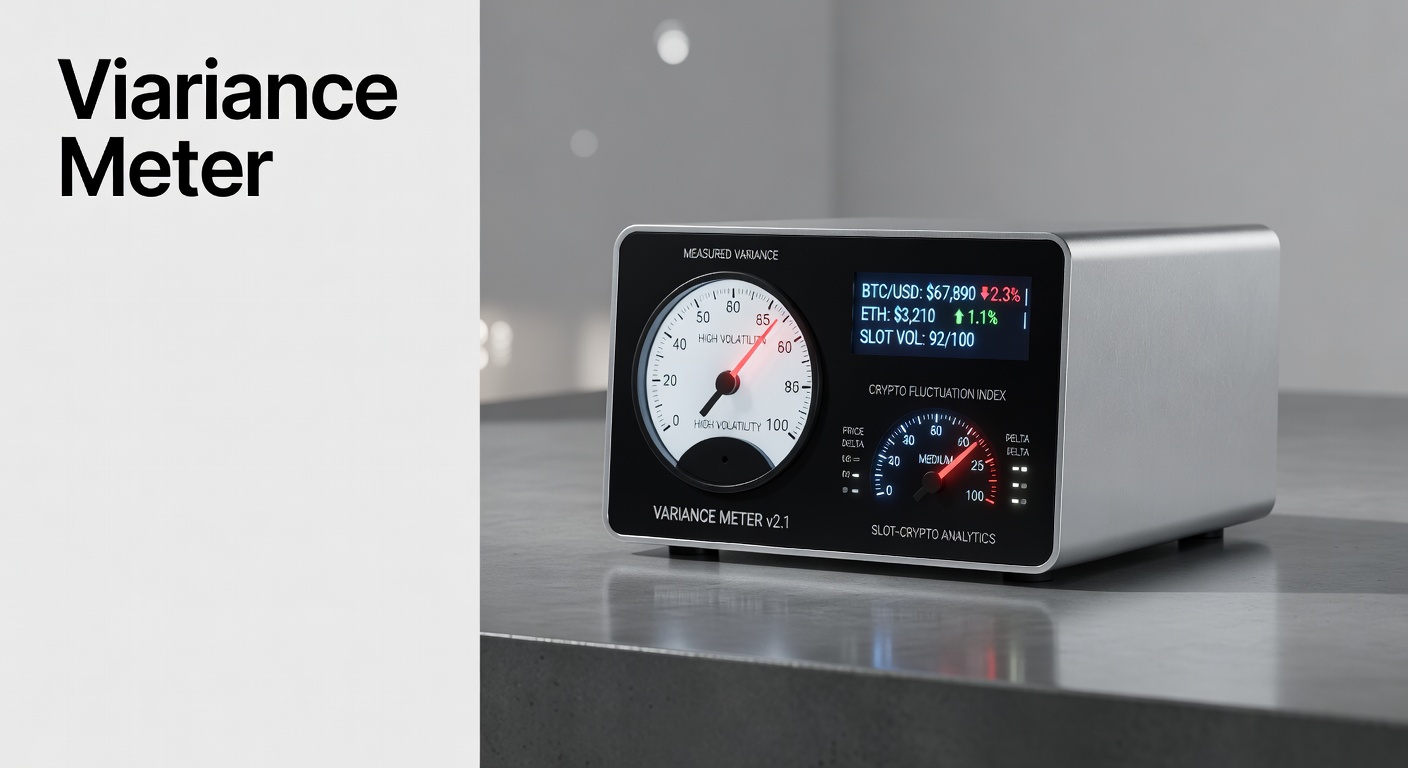
There is a woman at the coffee shop who plays slots for exactly two hours every Sunday. She told me once that she had found a machine that was "right for her." I asked what that meant. She said it did not punish you too hard. You could stay in action without getting wiped out too fast.
She was describing variance without using the word. She had found a low-variance machine.
Variance in gambling measures the spread of possible outcomes. High variance means your results could range from amazing to terrible in a short timeframe. Low variance means your results stay close to the expected average.
Consider two slots. Both have 96% RTP over infinite play.
Slot A has low variance. The wins are frequent and small. You might win 5 quid on one spin, lose 3 on the next, win 4 on the third. Your balance fluctuates slowly. Over two hours, you lose around 8 quid as expected, but you never see a huge swing.
Slot B has high variance. The wins are rare and large. You might lose 50 times in a row, then win 200 on a single spin. Your balance fluctuates wildly. Over two hours, you might be down 100 quid or up 50, depending on luck. The expected loss is still 8 quid (same RTP), but the range is much wider.
How Variance Is Measured
Mathematicians measure variance using standard deviation. A low-variance machine has low standard deviation. A high-variance machine has high standard deviation.
For the woman at the coffee shop, low variance was better. She had two hours and 20 quid. On a high-variance machine, there was a good chance she would lose all 20 in thirty minutes, then have nothing left to play. On a low-variance machine, she could extend the two hours and see multiple wins along the way.
For someone playing one hour and trying to hit a big score, high variance is better. They need the machine to produce a large win. Low variance will not give them that. High variance might.
The Paytable Tells You
Variance is determined by the paytable. A machine with many small wins has low variance. A machine with one massive jackpot and many losses has high variance.
NetEnt and Pragmatic Play publish variance information for their games. It is usually labeled as "volatility": low, medium, or high. This is not hidden. You can look it up. Most players do not.
The Emotional Dimension
Variance is not just mathematics. It is psychological. A high-variance machine is emotionally exhausting. You lose for long stretches, then one win comes and you feel alive. Then you lose again. The emotional swings are as large as the money swings.
A low-variance machine is emotionally stable. You win small amounts regularly. You never feel the full despair of a long losing streak. You also never feel the euphoria of a massive win. It is steady.
The woman at the coffee shop picked low variance because the emotional experience was better. She wanted to feel like she was winning, even if the wins were small. She wanted to spend her two hours playing, not thirty minutes playing and ninety minutes sitting around frustrated.
For Your Situation
If you have limited time and want to maximize your sense of action, pick low variance. If you have money to risk and are chasing a specific big win, pick high variance. If you are trying to manage your bankroll over multiple sessions, understand variance and adjust your bet size accordingly.
Variance is the hidden dimension of slot machine design. RTP tells you the long-term direction. Variance tells you the path you will take to get there. Know which one you want.