
Bally and IGT: Companies Built on Spin
I spent $40,000 on Bally slots over three years. I learned more from that company than it learned from me. What I learned was that I was not special.
Rizz Cash Tape3 min read
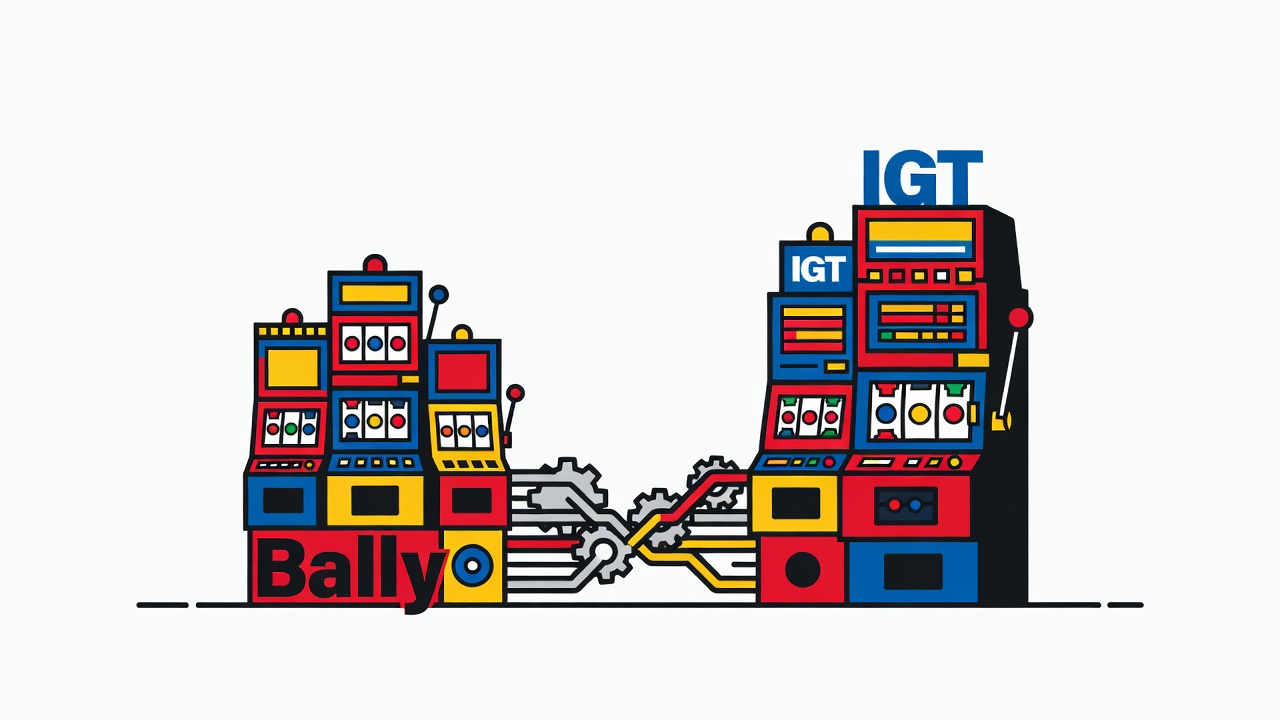
I did not know what Bally was when I first encountered their machines. I was in a casino in Reno. A woman who knew the floor told me: Bally makes about 60 per cent of the slots on the strip. I thought this was interesting information. Now I know it was the kind of fact that keeps you at the table longer.
Bally Manufacturing Company started in 1932. They made pinball machines. The business was solid. Reliable. Then in the 1960s, they pivoted to electronic slots. This was the big move. This was the bet that changed everything.
What I Learned About Bally
A Bally slot is engineered to feel responsive. The buttons are weighted slightly below what your finger expects, so pressing them feels like you have more control than you do. The sounds are layered: a bass thump for the reels, a chime for wins, a minor-key descend for losses. These are not accidents. These are design decisions made by people who understood that the machine needed to feel like it was responding to your actions, not just printing money outcomes.
I played Bally's "Hot Shot" machines. The theme was racing. Bright colours. Fast acceleration sounds when you hit a win line. The RTP was somewhere around 94 per cent, which meant the house kept 6 cents of every dollar. Over three years, if I put in $40,000, the house kept about $2,400. That is how it works. Everyone knows this. But knowing it and feeling it are different.
Bally knew this gap. They built machines that made the knowing part feel irrelevant.
The Corporate Story
Bally International was a division of the company that expanded aggressively through the 1980s and 1990s. They supplied machines not just to casinos but to bars, convenience stores, tribal gaming halls. They became ubiquitous. The reach was extraordinary. Bally machines were everywhere there was money and the desire to see it move.
Several times during my play, I thought about the people who made the decision to engineer the button feedback, to tune the sound design, to optimise the screen layout for maximum visual stimulation. These were smart people. They understood psychology. They understood behavioural economics. They were not stupid. They just worked for a company whose entire business model was predicated on the fact that understanding behaviour and optimising for engagement were the same thing.
I do not blame them. I blame myself for not understanding the game clearly enough.
IGT and the Industry Consolidation
International Game Technology, now called IGT, started as a smaller competitor. They grew through acquisition and innovation. By the 2000s, Bally and IGT dominated the market. If you were on a casino floor, you were playing one of their machines. If you were not on a casino floor, you were still exposed: they provided machines to tribal casinos, to bars, to racetracks. They had complete vertical integration over the experience of gambling.
When IGT acquired Bally in 2014, nobody was surprised. It was consolidation of an already-consolidated industry. One company buying another company to expand an empire that was already enormous. The regulatory bodies approved it. The shareholders approved it. And I, by that time, had stopped playing.
What the Numbers Tell
Bally and IGT do not publish their revenue per-machine, but industry analysts estimate it. A single modern slot machine in a casino can generate $200,000 to $400,000 per year in revenue for the operator. The operator pays the machine manufacturer a percentage of that revenue, typically 20-30 per cent. A single machine can generate $40,000 to $120,000 per year for IGT or Bally.
A single machine.
There are 200,000 slot machines in Nevada alone. Do the mathematics. The revenue is incomprehensible. These companies are not selling gambling. They are selling engagement machines. The gambling is the frame. The retention architecture is the substance.
Recovery
I stopped playing about seven years ago. This is not a moral victory. It is just a statement of fact. The recovery is ongoing. It will always be ongoing. I understand now that Bally's genius was not in making the machine better. It was in making the experience feel earned. Every chime was a small victory. Every loss was met with another button press and another small dose of hope.
They designed hope for six cents on the dollar. That is the company's real product.