
Ante-Up Cash Games: A Dialogue on Risk and Fortune
What is it that the player believes when they place money on the table? One might ask this question endlessly and find new answers each time.
Rizz Cash Tape3 min read
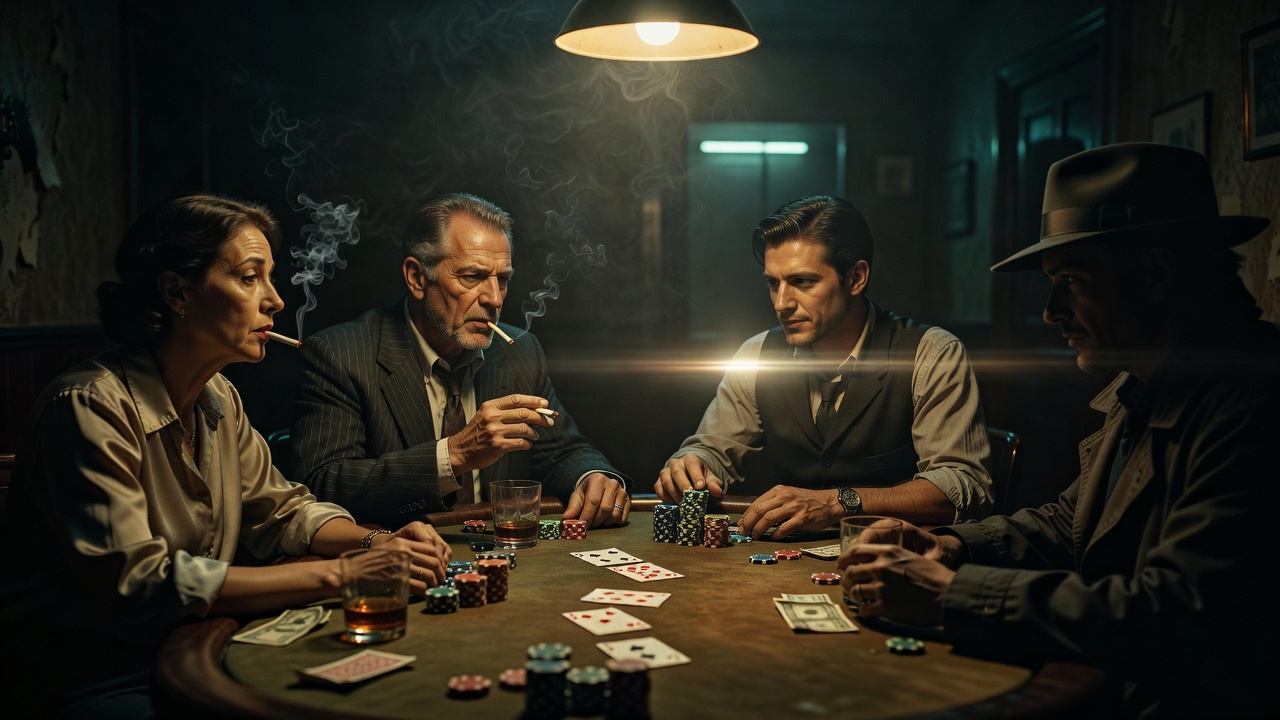
Consider the cash game as a chamber for examining human belief. Not belief in God or virtue, but belief about the future. What does the player think will happen when the cards are dealt? What mathematics live in their mind? And, more troubling still, what fantasies?
An ante-up game is the simplest form of poker. Each player puts money into the pot before cards are dealt. A small amount per hand, per round. It compounds. Ten hands at a dollar ante becomes ten dollars in play before anyone has even seen their cards. This is the contract.
The Question of the Future
One might ask: why does the player believe their next hand will be the profitable one? The answer is not logical. Logic suggests that, in a zero-sum game, the average player will lose money over time. Yet players sit down expecting gain. This is not stupidity. This is hope operating as mathematics.
The ante-up game is attractive precisely because it feels manageable. The antes are small. The entry cost is low. A player can sit for four hours and ante perhaps one hundred dollars. But in that time, if they play reasonably, they may win or lose thousands depending on their card strength and their ability to read opponents.
The ante forces a kind of participation. You cannot sit idle and observe. You must contribute. This creates psychological investment. You have already paid. Now you must play to justify the cost.
The House View
In casino cash games, the house takes a percentage of each pot, called the rake. This is the fee for providing the table, the cards, the dealer, the security. A typical rake is five per cent of the pot up to a capped maximum. On a small ante game, with modest pots, this percentage is nearly invisible. Yet over a thousand hands, it compounds. The house accumulates capital while the players recycle the same dollars.
One might ask whether the players understand this. Some do. Most do not, or do not wish to acknowledge it. They believe they are playing poker against other players. In truth, they are playing against a combination of opponents and a mathematical headwind.
The Skill Expression
Yet the ante-up game is not purely game of chance. Skill matters. Position matters. Reading opponents matters. A skilled player can overcome the rake and achieve edge. This is possible. This is rare. But it is possible, and this possibility is what keeps skilled players at the table.
The before-up structure is democratic. Rich and poor sit at the same table. The ante does not discriminate. But the player's ability to absorb losses, their knowledge of probabilities, their emotional control, their ability to endure variance: these discriminate sharply. The wealthy player, even if poor at poker, has advantages. They can survive longer. They can absorb more variance. This is how wealth compounds at the table.
The Cost of Knowledge
The ante is a fee you pay to learn who your opponents are. In the first hour, you discover who is tight and who is loose, who bluffs and who checks strong hands. This information has value. The cost is your antes. This is sensible.
But many players interpret the ante as permission to play loosely. They paid their ante, so now they should get value. They play too many hands. They chase draws. They bluff in spots where bluffing will not work. Their antes accumulate into a loss.
One might ask what this teaches us about human nature. It teaches that we rationalise costs retroactively. We have paid, therefore we must profit. This is a cognitive error, but it is a very human one. The ante-up game exploits this error perfectly.