
Live Dealer Evolution: When Technology Became Theatre
The live baccarat table used to be just a table. Then it became a stage. Now it is something between a game and a performance, and the line keeps shifting.
Rizz Cash Tape3 min read
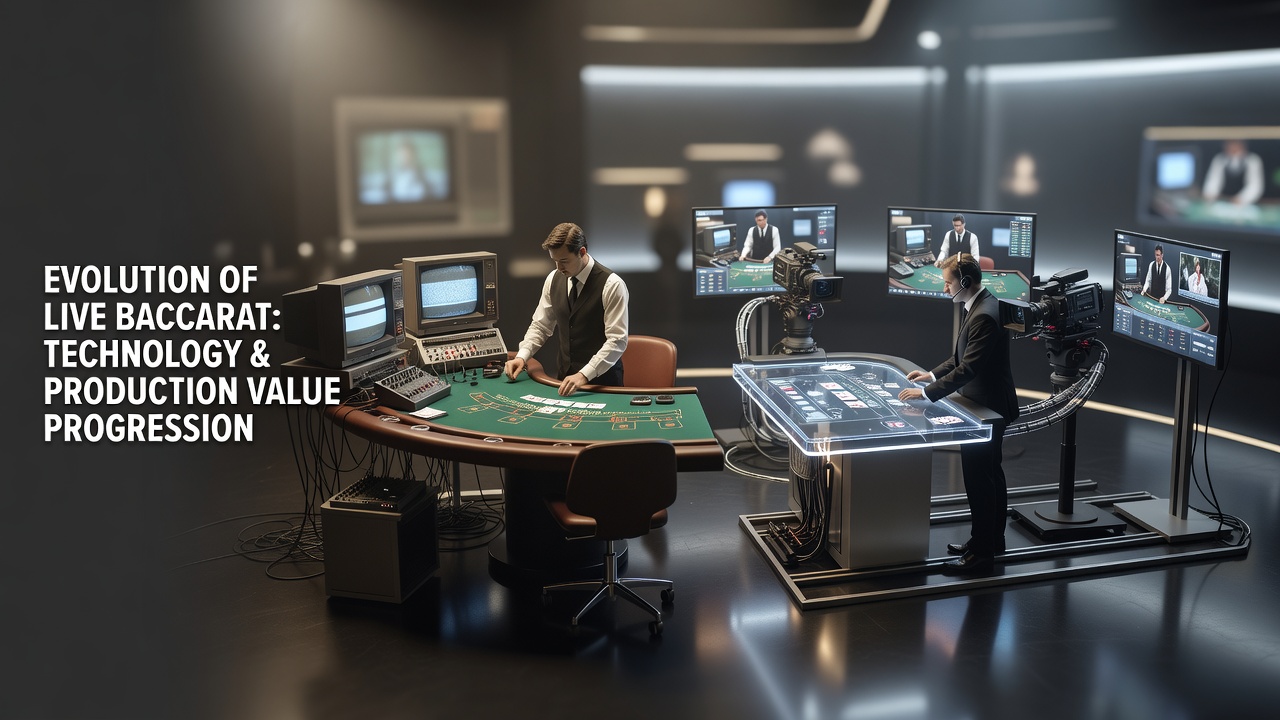
I worked live baccarat for seventeen years. The progression of technology in that room was not a simple march forward. It was a series of choices about what to reveal, what to hide, and how much theatre the game could accommodate before it stopped feeling like gambling and started feeling like entertainment.
When I began in 2004, live dealer was new. A single camera pointed at the table. The feed was streamed to online players. The dealer wore standard casino attire. The pace was slow and deliberate. A hand of baccarat took perhaps three minutes. Squeezed cards took longer. The ritual was intact.
The Slow Creep of Enhancement
By 2010, the technology began to evolve. Multiple camera angles appeared. Close-ups of cards became standard. The operators started enhancing the visual experience. Instead of one feed, there were four, and the viewer could choose. The lighting improved. The felt texture was visible. You could see the wear in the fabric.
The experience became more immersive but also more mediated. The technology was supposed to bring the player closer to the action. Instead, it mediated the action through angles and editing choices. A live broadcast is still a broadcast. Someone makes decisions about what you see.
By 2014, the enhancement accelerated. Some operators introduced slow-motion replays. A squeeze would be performed, then replayed in ultra-slow-motion. The tension was artificially extended. A three-second action became a twenty-second sequence: squeeze, slow-motion, replay, then the card reveal.
This changed the game psychologically. Baccarat had always been about the speed of events and the immediate resolution. Introducing delay artificially extended the emotional experience. Players reported staying in games longer, placing more bets per hour, losing more money.
The Performer Emerges
The dealers themselves began to shift. Early live dealers were professional but neutral. They performed their role with minimal personality. By the late 2010s, operators began hiring dealers who could "perform." Attractive dealers. Dealers with charisma. Dealers who acknowledged the camera and the players watching.
The game started to become entertainment. A hand of baccarat was no longer a discrete event with a clear outcome. It was a sequence of moments: the dealer greeting the players, the shuffle, the building tension, the squeeze, the card reveal, the reaction, the payout.
This was entirely deliberate. Operators understood that the pure mathematics of baccarat was not enough to hold attention. The game needed theatrical elements. So dealers became performers. Tables became stages.
The Recent Evolution
In the last five years, the enhancement has reached new levels. Some operators introduced special effects. Holographic elements. Enhanced graphics overlaid on the footage. Some tables feature multiple simultaneous games displayed on split screens.
One operator introduced "Infinite Blackjack," where unlimited players could join a single game because the dealing sequence was decoupled from the table's physical constraints. The technology allowed for pure infinite supply of seats. Players did not compete with each other for space. They all played against the dealer simultaneously.
From a design perspective, this is clever. From a player psychology perspective, it is devastating. A player feels less like they are participating in a discrete game and more like they are feeding inputs into a machine. The human element of the dealer, the other players, the shared table experience: all of it gets abstracted.
What Technology Reveals
The progression of live dealer technology reveals something fundamental: as technology improves, the pressure to monetise that improvement increases. Every new capability becomes a feature. Every feature gets optimised for engagement. The game evolves not toward purity but toward maximum grip.
The original appeal of live dealer was authenticity. A real dealer, a real table, a real game. Now, live dealer is a carefully constructed experience where every element has been optimized for emotional resonance and engagement duration. The authenticity remains only in the name.
I see it in younger dealers now. They are trained in performance. They are taught to maintain eye contact with the camera. To build narrative tension. To make each hand feel like an event. They are becoming entertainers more than dealers.
Baccarat itself has not changed. The mathematics are identical. But the experience of playing baccarat has transformed from a game to a theatrical event designed to extend duration and maximize engagement. Technology did not make the game better. It made the game more compelling, which is a different thing entirely.