
Dennis Nikrasch: The Slot Technician Who Exploited the Machine Code
Rizz Cash Tape3 min read
Dennis Nikrasch understood slot machines the way a locksmith understands locks. Not to steal from the lock, but to know where every pin sits. In 1995, at the Sands in Las Vegas, he walked away with approximately $100,000. By some accounts, the figure was higher. The casino, however, wants to forget he ever existed.
The mechanics of what Nikrasch did are still not entirely clear in public record. What is known: he gained access to the game code of early IGT machines. He identified a vulnerability in the random number generator. He took the knowledge to the felt.
The Machine and the Man
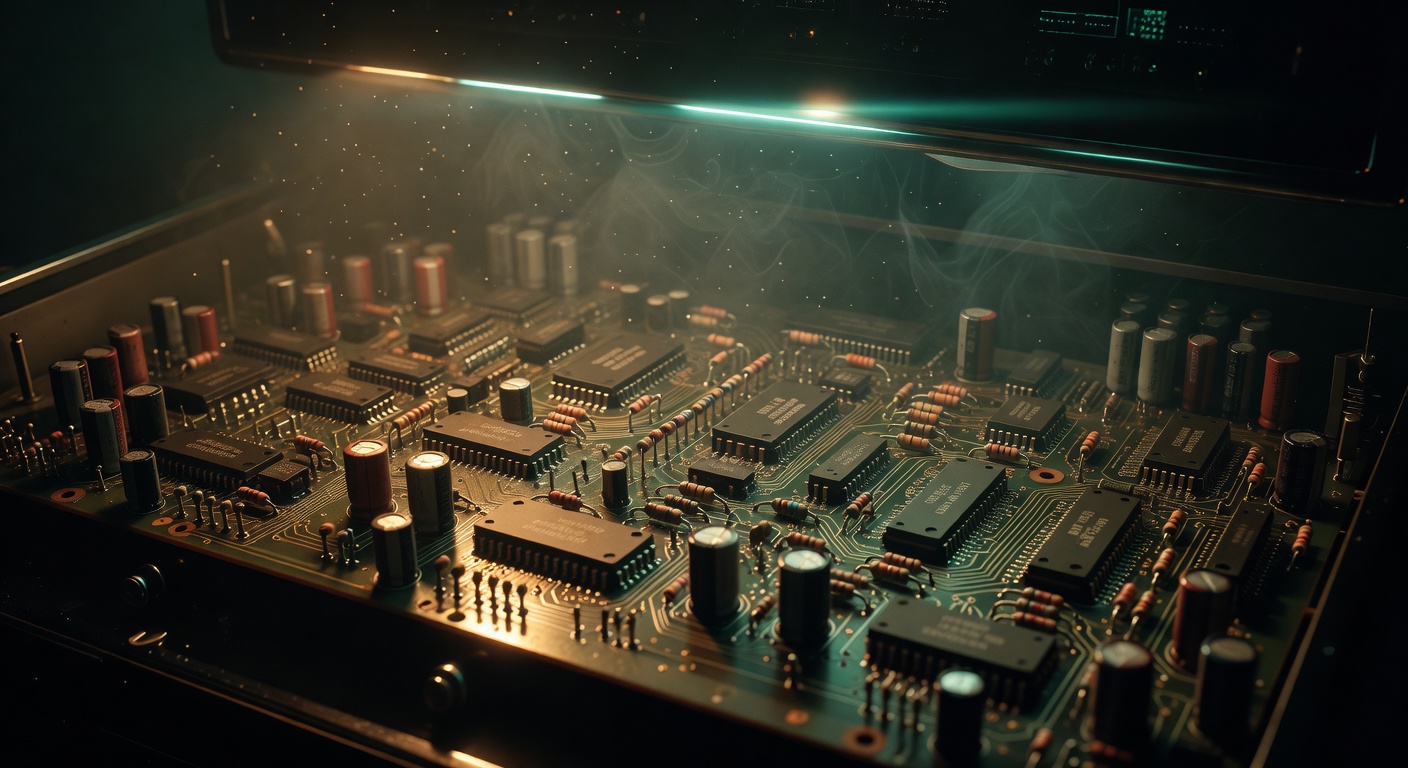
A slot machine in 1995 was still largely mechanical. The random number generator was a software routine that ran in a chip. The chip was soldered to a circuit board. The circuit board sat in a cabinet that thousands of people passed by each day.
Nikrasch had worked in the industry. He understood the architecture. The vulnerabilities in the RNG of that era were not errors in the mathematical sense. They were oversights in the implementation. A skilled technician, if he knew what he was looking for, could predict the sequence of numbers that the machine would generate under certain conditions.
The prediction was not perfect. It was probabilistic. But across enough spins, the edge was there, and the edge was measurable.
The Execution
Nikrasch and his associates played the Sands over the course of weeks. They hit specific machines at specific times. They knew, with better than random accuracy, when the machine was about to hit a jackpot. When the pattern aligned, they pressed the button.
The casino noticed. They called the Nevada Gaming Commission. They called federal law enforcement. Nikrasch was prosecuted, but the record is oddly opaque. The charges, the plea, the sentence: all were handled in a way that suggests both the casino and the federal government wanted the story to disappear.
What emerged later: Nikrasch had stolen somewhere in the neighborhood of $5 million to $10 million over a period of years, hitting multiple casinos. Some sources push the figure higher. The exact amount matters less than the fact that a single person, armed with technical knowledge and patience, had fundamentally broken the entire slot apparatus of an American casino.
The Aftermath and the Lesson
After Nikrasch, the gaming industry went through a period of rapid machine replacement. Older IGT cabinets were phased out. New machines were built with multiple redundancies in the RNG. The code was audited by third parties. The vulnerability surface got smaller.
But the principle remained: a machine is only as safe as the code that runs it. If you can read the code, if you understand the architecture, if you can predict the sequence, the machine is not random. It is deterministic and exploitable.
The casinos solved this not by making machines theoretically random, but by making machines practically unreadable. They obscured the code. They added legal barriers against reverse-engineering. They hired security specialists to think like Nikrasch, and then they built systems to make Nikrasch's approach impossible.
A truly random machine is one that cannot be understood. The harder the machine is to understand, the safer it is from the person who understands it best.
Nikrasch's legacy is not the money he took. It is the arms race he triggered. Every modern slot machine, every security protocol, every audit trail exists because one man sat at a Sands machine in 1995 and realized that the thing the casino promised was random could be predicted. The casinos learned their lesson. The machines got harder. The exploit became impossible.
But for a brief window, the door was open, and Nikrasch walked through it.