
Akio Kashiwagi: The Whale Who Lost in Atlantic City
In January 1990, a Japanese businessman sat at a baccarat table in Atlantic City and lost ten million dollars in a single night. The story ended worse than anyone expected.
Rizz Cash Tape3 min read
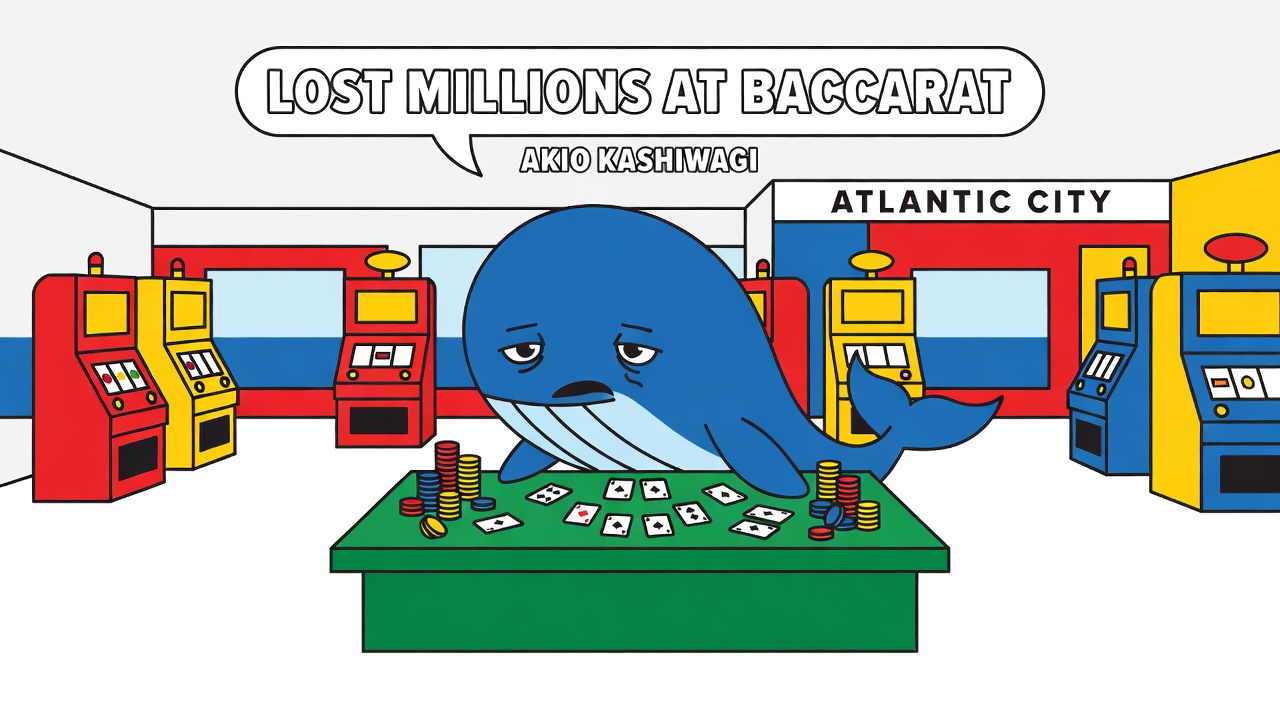
Atlantic City. January 9th, 1990. A Thursday night.
Akio Kashiwagi was a successful property developer from Tokyo. He had made his fortune in Japanese real estate during the boom. He had also spent the 1980s as a whale at high-limit baccarat tables across the world. Macau, Monte Carlo, Atlantic City. Wherever there were good tables and discreet management, Kashiwagi appeared.
Trump Plaza Casino, on the Atlantic City Boardwalk, had opened a new high-limit room. The casino was desperate for action. Kashiwagi called ahead. He would be coming. He would be bringing capital.
The Setup
When Kashiwagi arrived, the casino rolled out the treatment. The suite was prepared. The table was set. The dealer stood ready. A single baccarat table, cleared for a single player's session. This was standard for whales of Kashiwagi's stature. The limits were flexible. The hours would be determined by the player's appetite.
Kashiwagi sat. He carried ten million dollars in his pocket. This was not unusual for him. A player of his calibre did not leave money unexamined.
The game that night was Punto Banco, the variant where the dealer and the player are the two hands. Kashiwagi bet against the house. The house collected a 5 per cent commission on banker wins. The edge was negligible. The variance was enormous. Over a long enough session, the house percentage would grind the player down. But a whale did not play for a long session. A whale played one hand and lost five million, then played another hand and won eight million, then lost it all plus two million more before walking away.
The Turn
For the first part of the evening, Kashiwagi played well. He was a skilled baccarat player. He understood the rhythms of the game. More importantly, he understood the psychology of variance. He was winning. At one point, he was ahead by several million.
Then the cards turned. Slowly at first, then with velocity. Kashiwagi's luck departed. The shuffled shoes became hostile. Each hand moved money away from him. The betting increased. This is how whales fail. The larger you bet, the longer you play, the more the mathematics inevitably asserts itself.
By 4 a.m., Kashiwagi had lost all ten million dollars. The casino had not needed to use any advantage. Probability had done the work. The variance that cuts both ways had cut against him.
Kashiwagi stood. He was not visibly distraught. High-limit gamblers are trained in stoicism. They have trained themselves to absorb massive swings with minimal expression.
The Aftermath
Kashiwagi returned to Tokyo. The loss was significant but not catastrophic. He had made the money once. He could make it again. This is what a successful businessman tells himself.
But something had shifted. The loss had focused attention on Kashiwagi back in Tokyo. Japanese organised crime syndicates had taken an interest in his affairs. The exact chain of events that followed remains unclear. Official records, even now, are fragmentary.
On January 4th, 1992, less than two years after his Atlantic City loss, Kashiwagi was found dead in his home. He had been stabbed. Multiple wounds. The crime was never solved. The yakuza was suspected but never conclusively linked. Kashiwagi's wife was questioned. Questions hung in the air.
The Atlantic City casino collected its money and moved forward. The table was reset. The next whale arrived. The business continued.
But for anyone who played baccarat in the high-limit rooms during that era, the name Kashiwagi carried weight. It was the reminder that the table does not care who you are. It does not know if you are a successful businessman or a broke tourist. The variance is agnostic. The house percentage is patient. And sometimes the mathematics ends in a way that no amount of money could have predicted.